Lessons from Adulthood
It’s been just over one year since we published Adulthood, a “life sim” game about trying to be your best self. With the release of the Pet Projects expansion, I thought it would be a nice time to reflect on how this game came to be. It’s also a chance to ask ourselves: what can a board game teach us about life?
I’ve led the design for several games (like Boss Monster, Call to Adventure, and The Dragon Prince). I’ve contributed to the design of many others (including Super Boss Monster and the Cosmere RPG). But if I could convince you to play just one of my games, it would be Adulthood. Here’s why, along with 10 Life Lessons from a board game designer’s perspective.
Life Lesson 1: Meaning Matters
Adulthood is the first time I’ve collaborated on a game design with wife, Beverly. The first step in the game’s origin story came when I asked her, “if life was a board game, how would you win?” She and I spend a lot of time thinking about how to help our three sons (and each other) lead happy, fulfilling, meaningful lives.
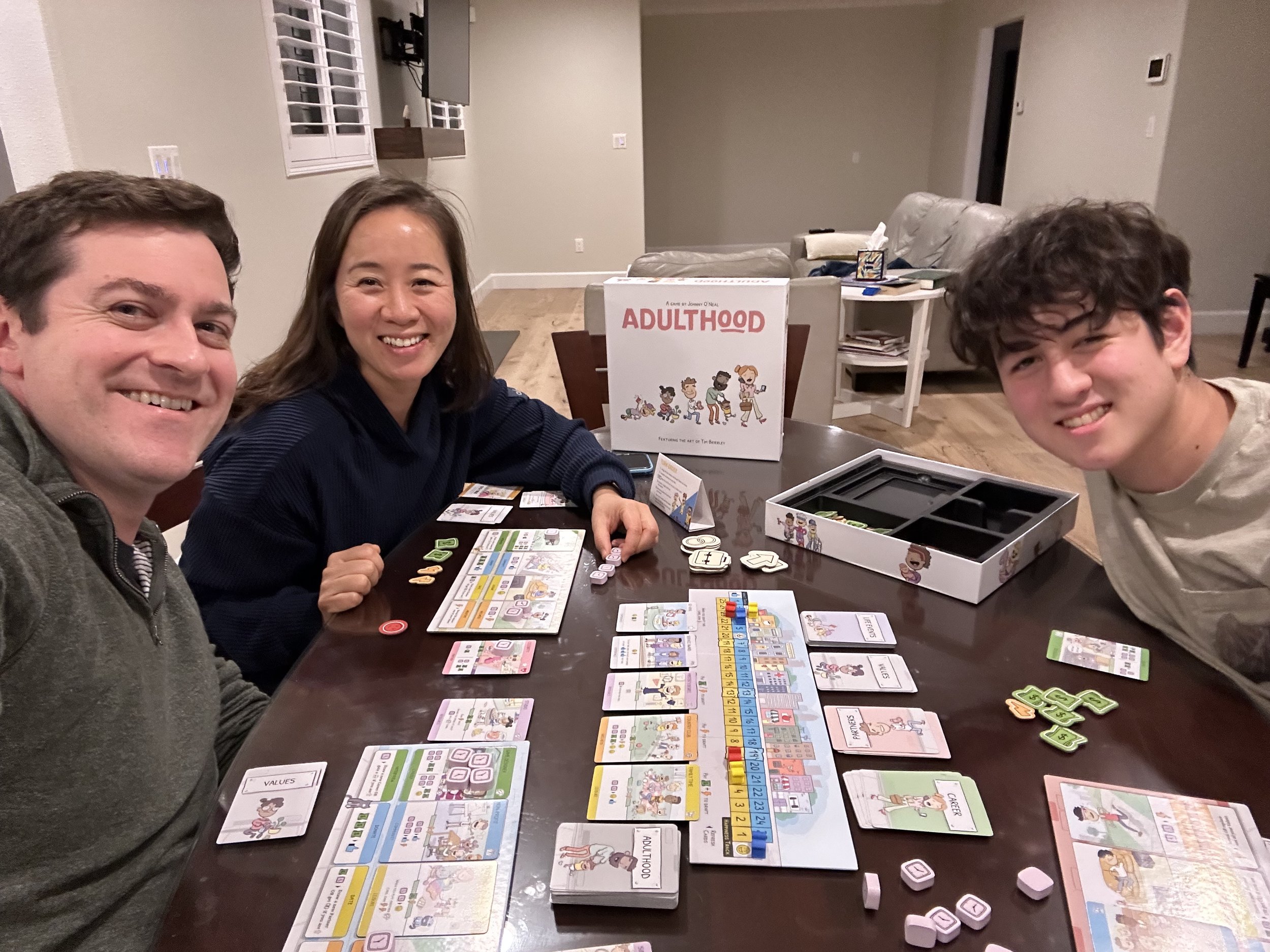
Adulthood hints at some of what we understand to be true about life. We can’t claim to be experts, but we’ve tried to gather wisdom from a lot of sources: personal experience, advice from mentors, and research on mental health and happiness. The result is a game that’s mostly about fun, but has a few things to say about how to lead a meaningful life.
Life Lesson 2: You Can't Take It With You
When I first set out to design Adulthood, one thing was obvious: winning the game would not be about who dies with the most money. I’ve always loved the classic game of Life, but its goal of “be rich” is obviously not the most helpful message.
In fact, the night I sat down and designed the first draft of Adulthood, it was because I’d spent the morning playing playing Life with our youngest son, and the afternoon playing Ark Nova. From that critically-acclaimed zoo-building game, I grabbed the idea of two scoring tracks that can contribute to victory. In Ark Nova, it’s “Appeal” and “Conservation.” In Adulthood, it’s “Happiness” and “Impact.”
Life Lesson 3: It's Personal
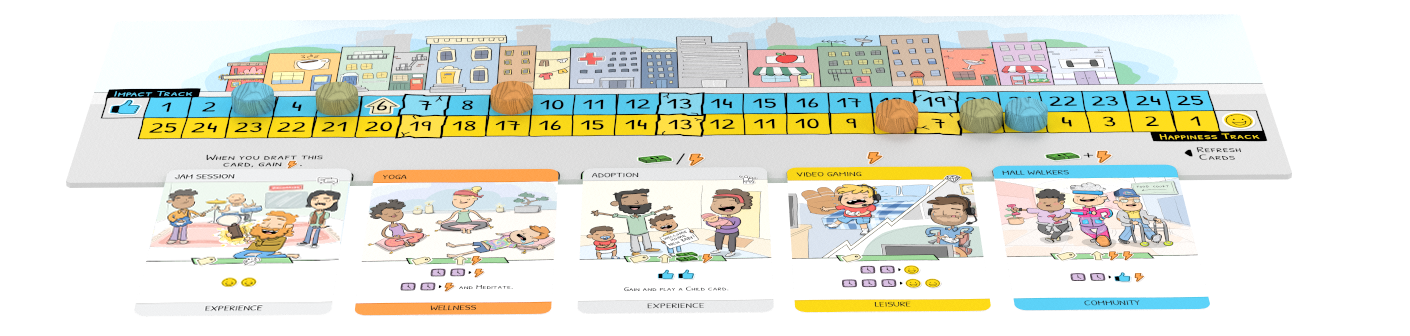
Every player’s score in Adulthood is unique. Some folks will win by having a lot of Happiness (the yellow track). Others will focus on having a positive Impact on other people (the blue track). Your final score is the sum of the two, so you could end up skewed in either direction, but most folks will meet somewhere in the middle.
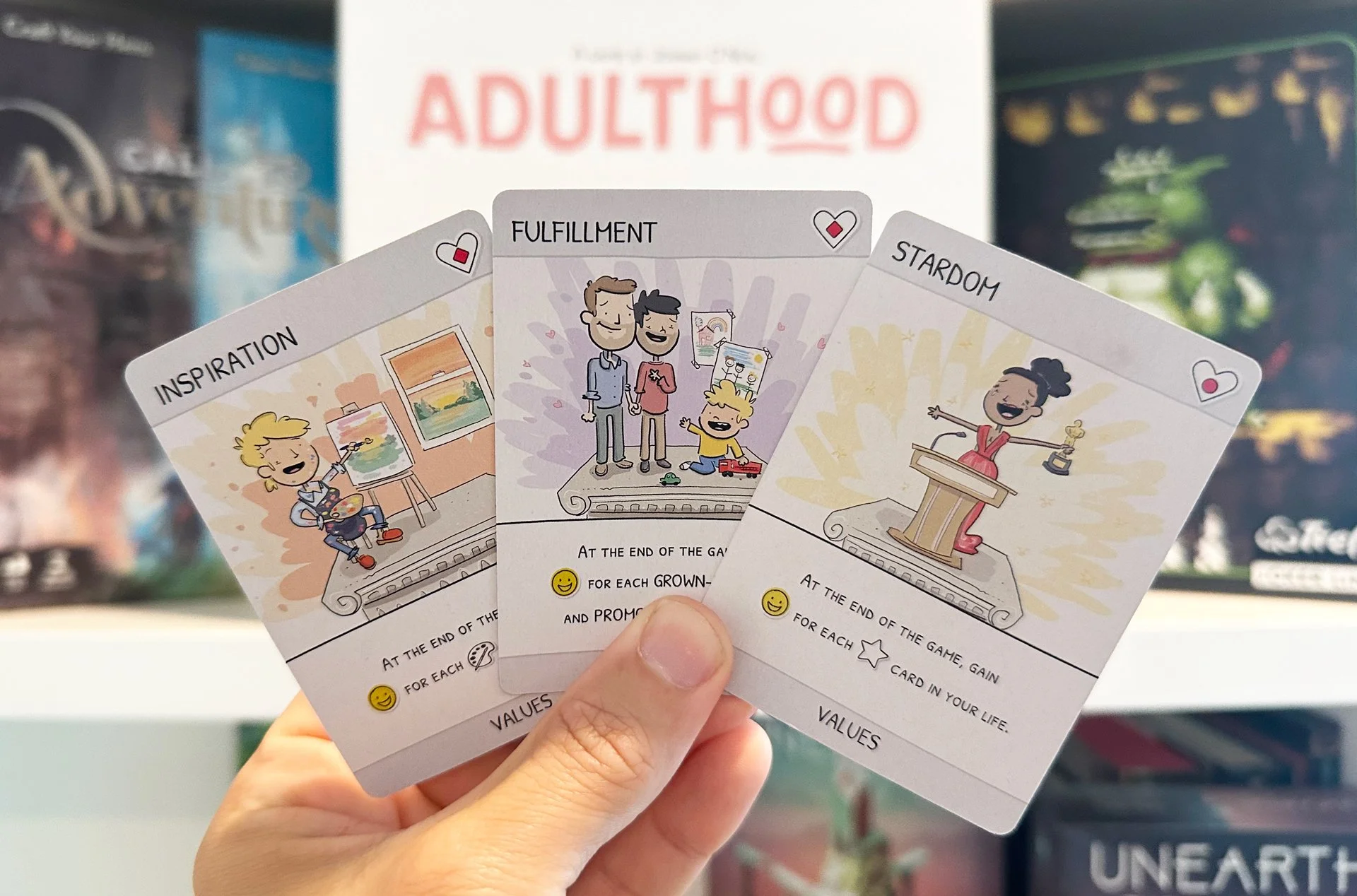
But you also have three Values that represent your inner sense of purpose, which are unique to you. This is where the old adage “know thyself” comes into play. You start out knowing one of our Values, but you have to spend time on introspection (the Meditate action) to learn the others. The better you understand yourself, the more you’ll be able to optimize your choices to get the highest endgame score. Your Values also determine your compatibility with Partners, indicated by who completes your heart (in the upper right-hand corner).
Life Lesson 4: There's No Single Right Answer
We wanted to make sure this wasn't a game that shows just one perspective on how to live a good life. While there are “Shady” cards in the game that reflect hedonistic or morally questionable choices, Adulthood recognizes that there are multiple ways to find Happiness and make a positive Impact.
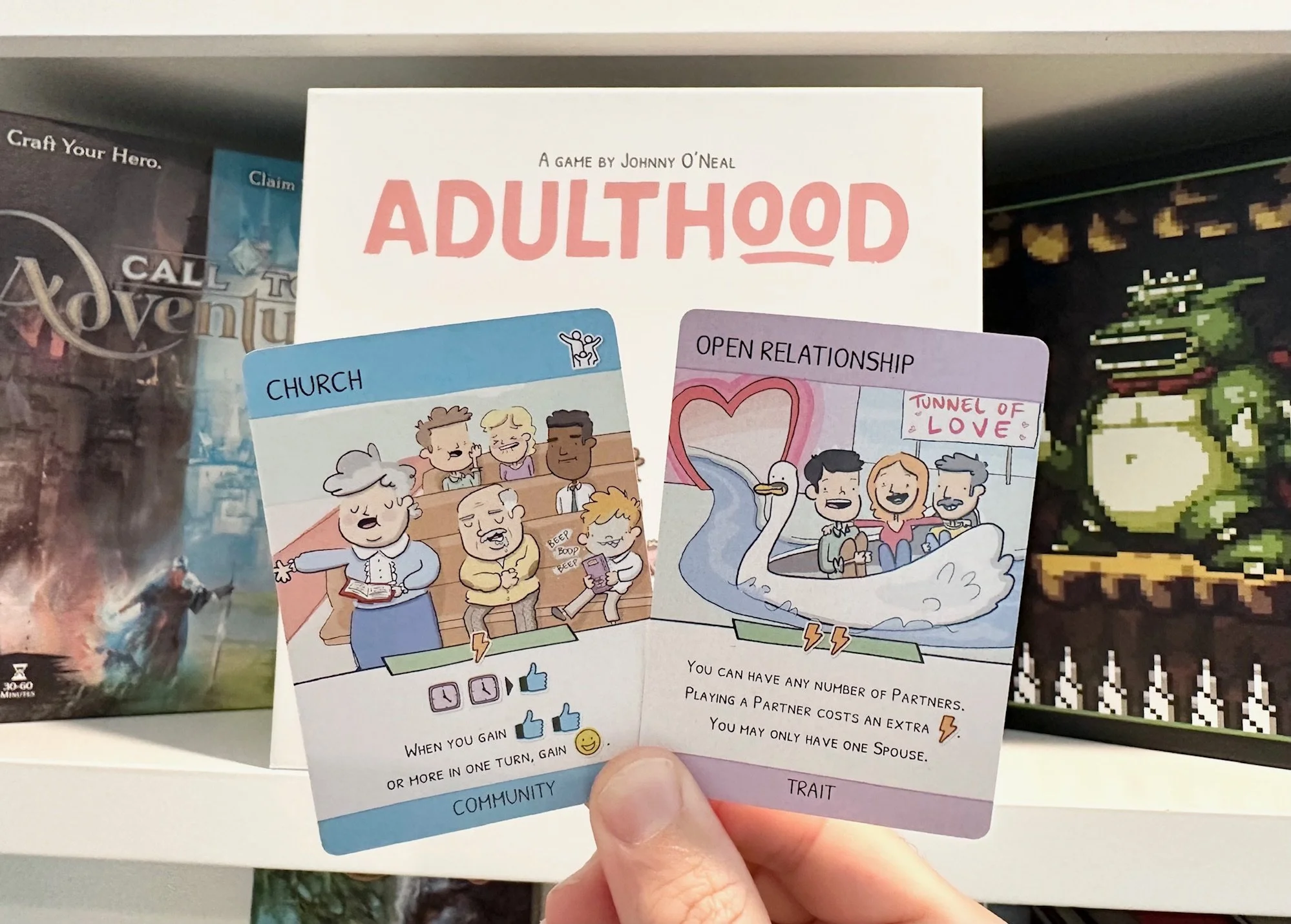
There are a few cards in the game that specifically reflect my interests, like the “Community Theather” card. But I didn’t want this game to be too self-centered. Some cards, like “Church” and “Open Relationship,” were inspired by other Brotherwise team members. Others are based on friends, relatives, or acquaintances. Just like in real life, there's more than one way to play.
Life Lesson 5: Make an Impact
I think most people agree that helping other people gives life meaning. But I’ve always been fascinated by the question of how to do the most good. Do you focus on your loved ones or try to help the world? Do you shake the hands of a thousand, or hold the hearts of a few?
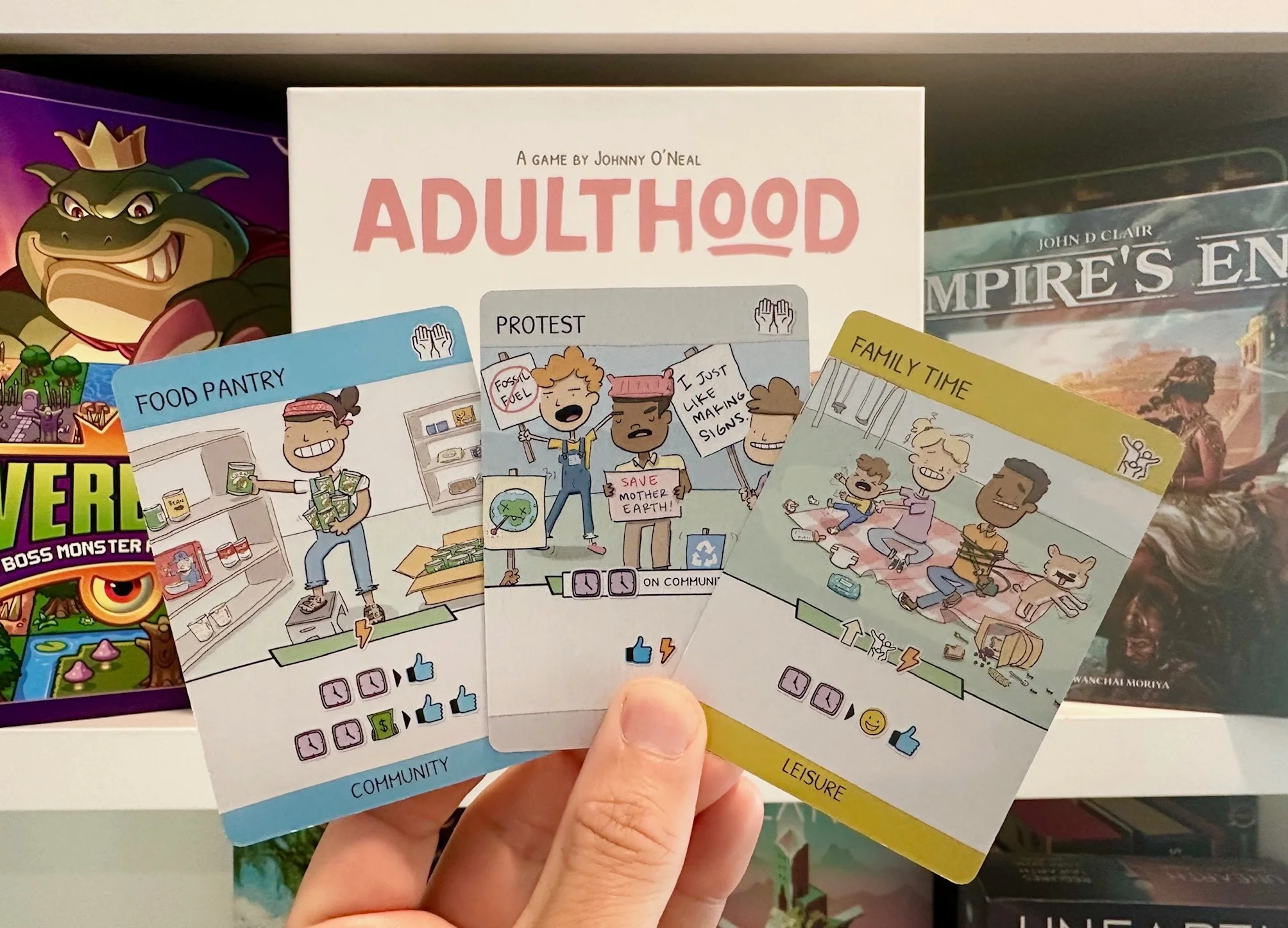
Adulthood doesn’t try to provide a definitive answer to that question, but it suggests that both types of Impact are important. You can earn points through community service and civic involvement, but also from cards that focus on family and close friendships.
Life Lesson 6: Don't Worry, Be Happy
To be there for other people, you have to take care of yourself. In Adulthood, you earn Happiness by having fun ...but certain activities have diminishing returns. We tried to (loosely) model what research tells us about actual happiness and mental health.
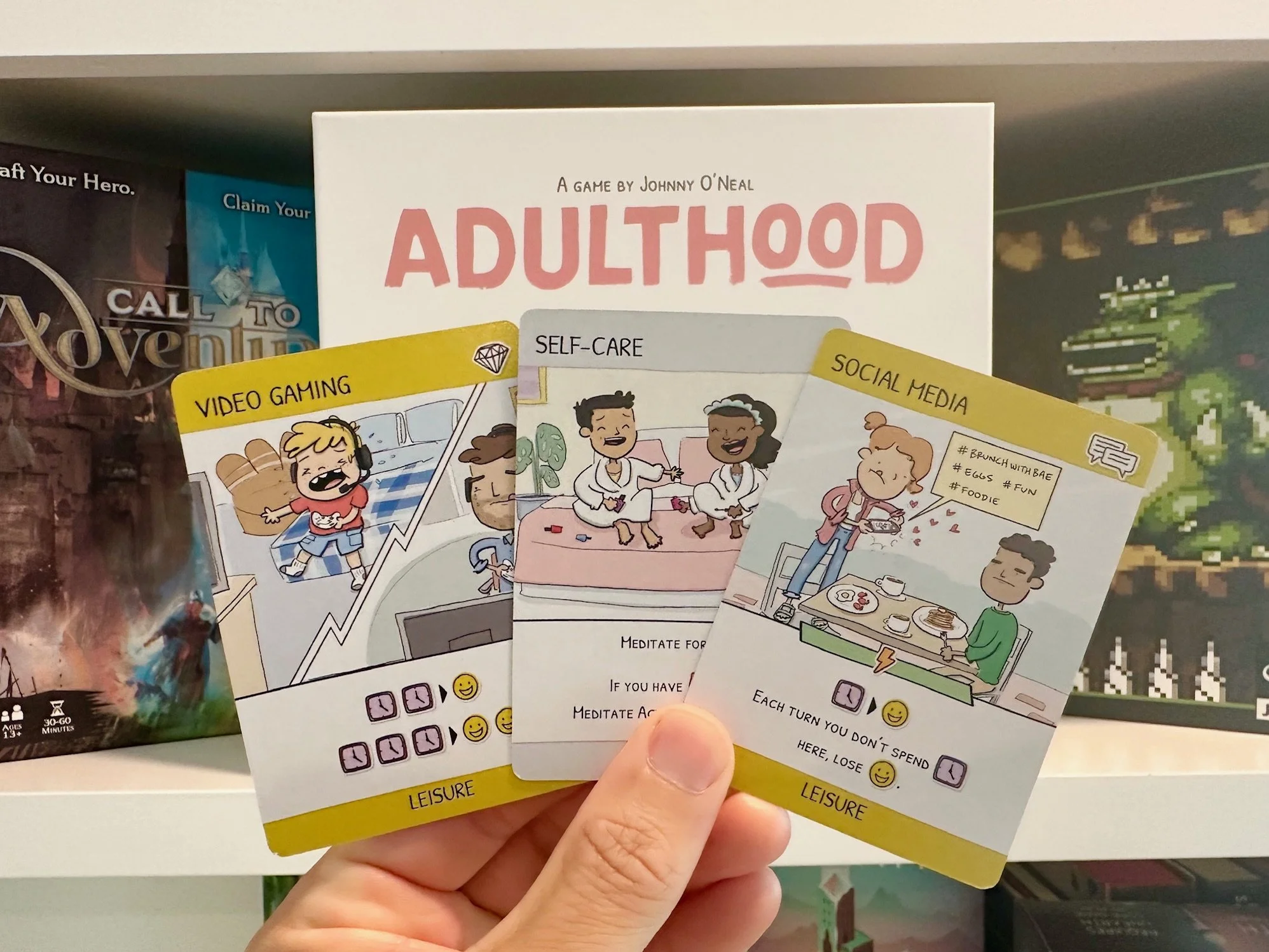
For example, you can get some short-term Happiness from social media, but it’s a little addictive.
Life Lesson 7: Furry Friends
Speaking of which, research is very clear that pets are good for us. They reduce our cortisol, increase our oxytocin, and have positive associations with community engagement and reduced anxiety.
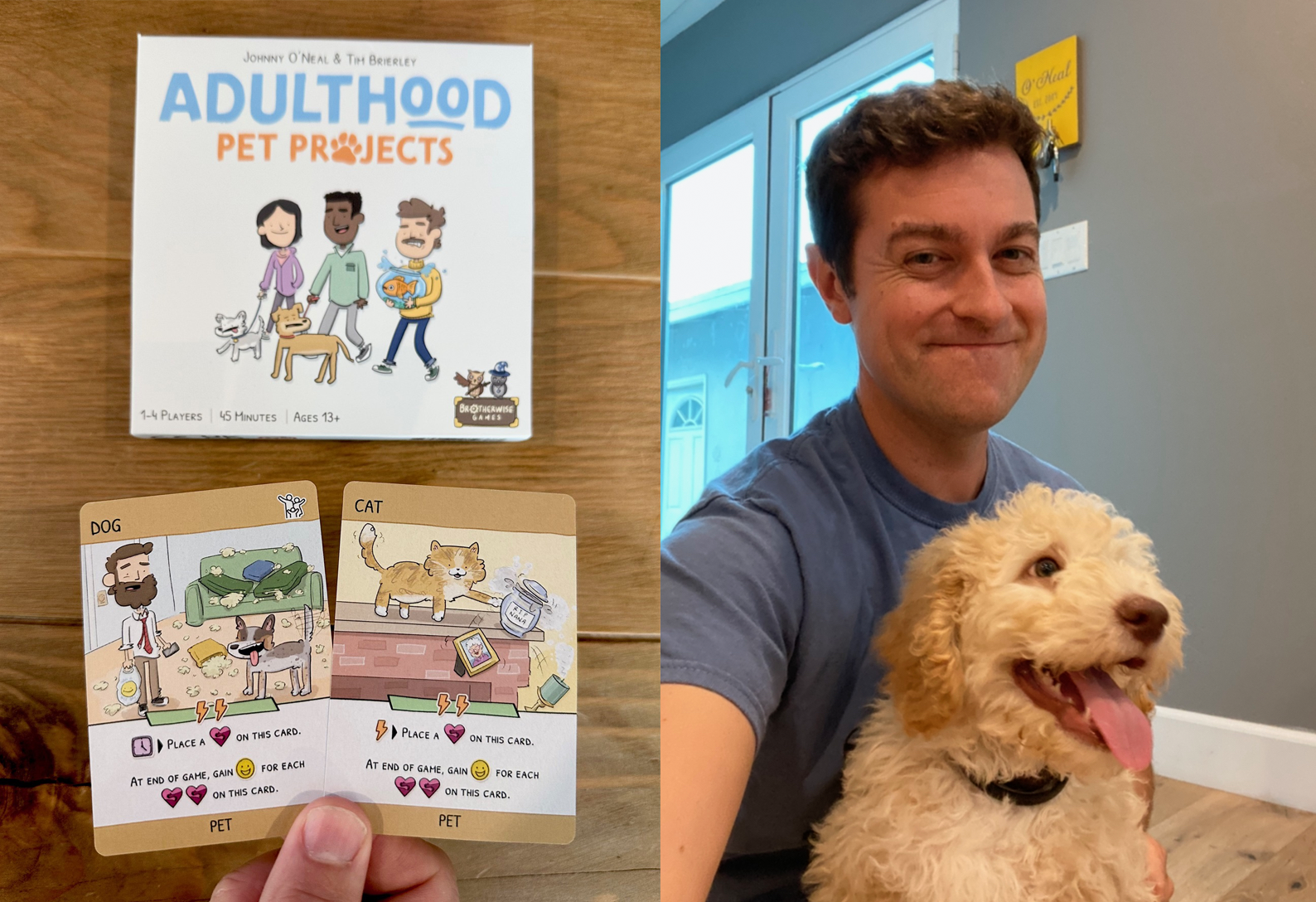
Pets are a wonderful part of life, even if I’ve never understood cat people. So I'm glad the first expansion for Adulthood is all about pets!
Life Lesson 8: A Means to an End
Having said all this, it's hard to be happy and impactful without the right resources. In real life, wealth has a log-linear relationship with happiness: it plateaus at a certain point, but is pretty closely related to your well-being.
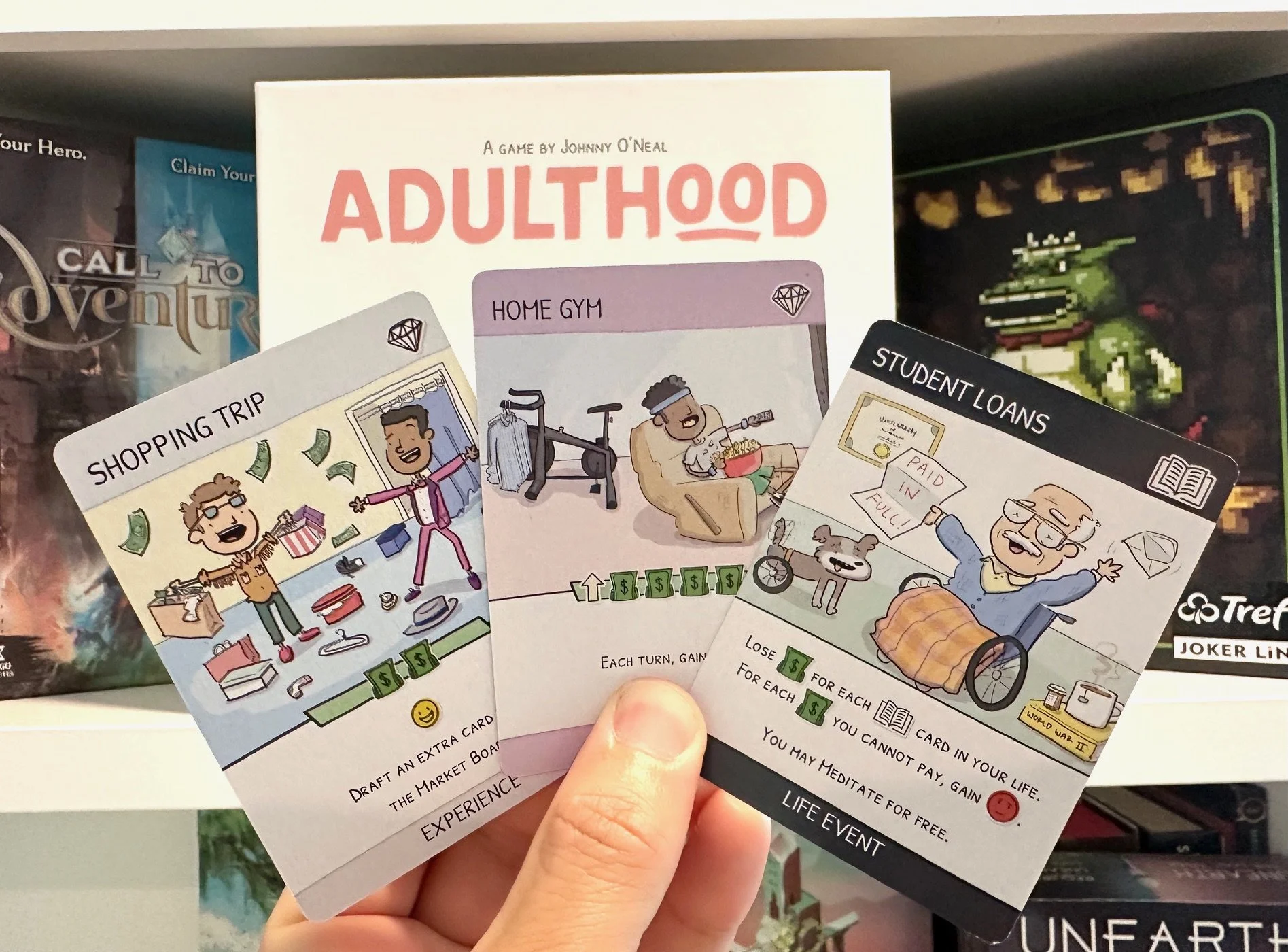
In Adulthood, "Money" won't give you points at the end of the game, but will help you pay for the cards that do.
Life Lesson 9: Be Well, Do Well
This is one of my favorite life lessons, because it’s been the hardest for me to internalize. In Adulthood, spending time on Wellness gives you "Energy," which you spend to play other cards, especially cards related to Creativity.
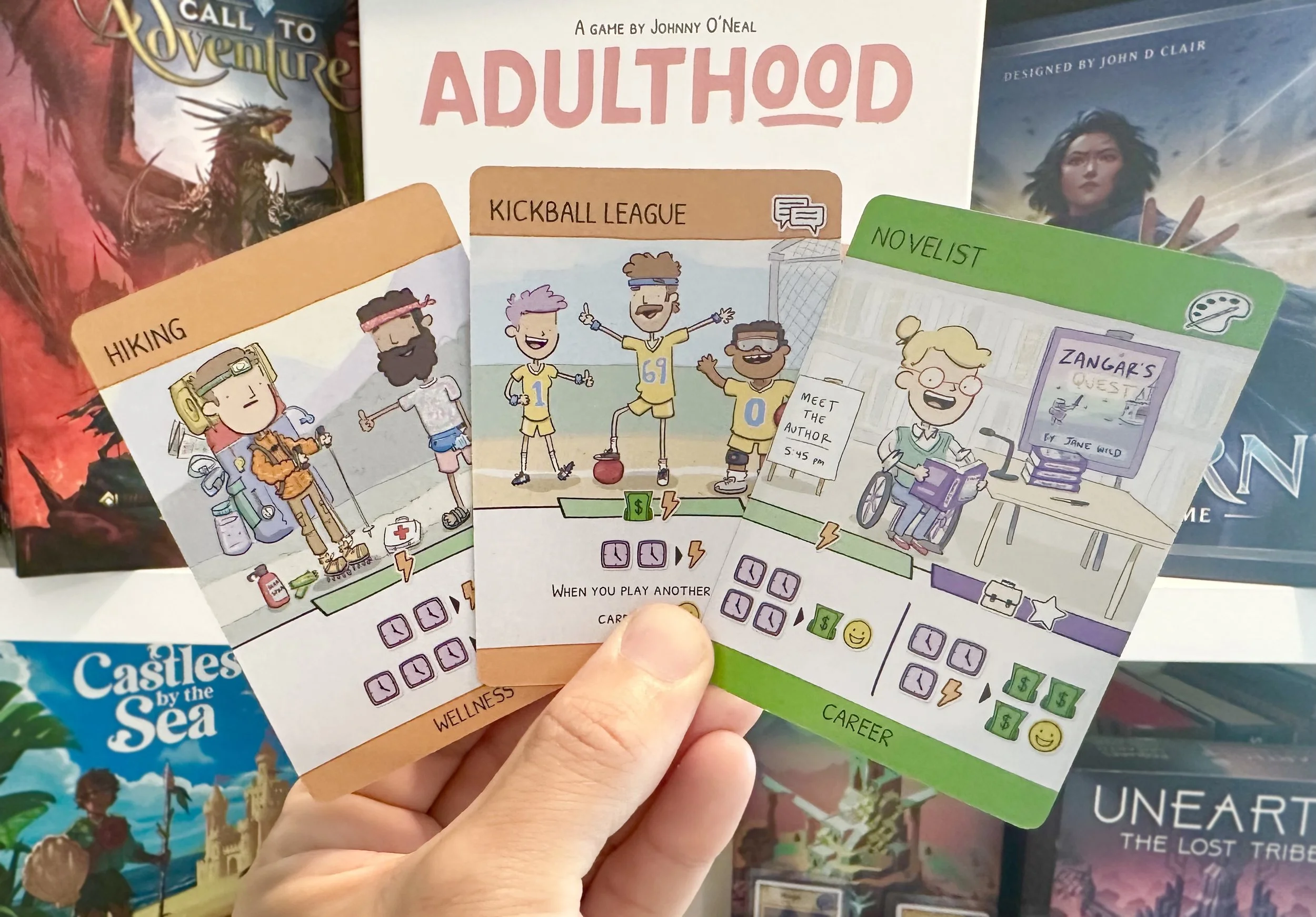
Even though I designed this, I constantly have to remind myself that it's true in real life. When I’m busy, I have a bad habit of telling myself that I don’t have time to work out. But there’s credible evidence that time spent on fitness actually pays for itself, making you more energetic and creative. I see this in my own life, and this little feature of Adulthood is one I have to remember to take to heart.
Life Lesson 10: Don't Forget to Smile
And of course, research is very clear about the benefits of laughter. Adulthood has you covered thanks to delightful artwork by Tim Brierly.

If any of these cards made you chuckle, be sure to check out timpostscomics on Instagram!

Thanks for joining me on this look at Adulthood, the most personal game I've designed. I think it's a lot of fun. It's the kind of game you can enjoy with just about anyone (though we’d call this one PG-13 for the occasional bit of “adult” humor).
You can find Adulthood at Barnes & Noble, your FLGS, or right here at BrotherwiseGames.com
Have a happy, impactful day!
⌚⚡💵💗😊👍